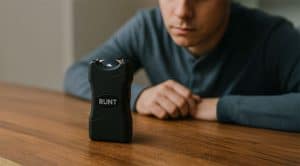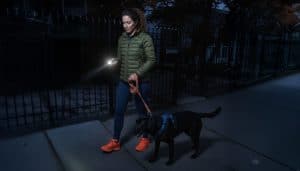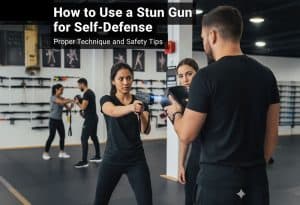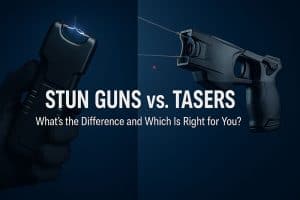



| Stun guns can be effective self-defense tools for seniors when chosen and used properly. Modern stun guns designed for older adults feature ergonomic grips, LED flashlights, and safety switches to prevent accidental discharge. Key considerations include grip strength requirements, legal restrictions in your area, and proper training. Essential facts for seniors considering stun guns: – Voltage ranges from 100,000 to over 1 million volts, but amperage matters more for effectiveness – Most effective models weigh 4-8 ounces and fit comfortably in arthritic hands – Built-in safety features prevent accidental activation during daily activities – Legal in most states but prohibited in some cities and municipalities – Require close contact (touching attacker) to be effective Bottom line: Stun guns offer a non-lethal self-defense option that doesn’t require significant physical strength, making them suitable for many seniors. However, they work best as part of a comprehensive personal safety plan that includes situational awareness and other protective measures. |
Table of Contents
- Why Seniors Consider Stun Guns for Protection
- How Stun Guns Work and Their Effectiveness
- Senior-Friendly Features to Look For
- Legal Considerations by State and Local Area
- Proper Usage and Training Requirements
- Alternatives and Comparison with Other Self-Defense Tools
- Safety Precautions and Storage Guidelines
- Choosing the Right Model for Your Needs
As we age, concerns about personal safety often increase while physical capabilities may decrease. Many seniors find themselves looking for effective self-defense options that don’t require extensive physical strength or complex training. This reality has led growing numbers of older adults to consider stun guns as a potential solution for personal protection.
The decision to carry any self-defense weapon requires careful consideration of legal, practical, and safety factors. For seniors specifically, additional considerations include ease of use, reliability, and compatibility with potential physical limitations such as arthritis or reduced grip strength.
This comprehensive guide examines stun guns from a senior’s perspective, covering everything from how these devices work to legal considerations, proper training, and alternative options. Whether you’re exploring self-defense options for yourself or a loved one, understanding these factors will help you make an informed decision about personal protection.
New to stun guns? Read our Stun Gun Buyer’s Guide
Why Seniors Consider Stun Guns for Protection
Vulnerability Factors Affecting Older Adults
Seniors face unique safety challenges that make them attractive targets for criminals. Physical changes associated with aging can reduce reaction time, mobility, and overall strength, making traditional self-defense techniques less viable.
Statistical data shows that adults over 65 experience certain types of crimes at disproportionate rates. Purse snatching, home invasion, and financial scams often target older adults who may appear less capable of physical resistance.
Common vulnerability factors include:
- Reduced mobility and slower reaction times
- Predictable routines and schedules
- Perceived inability to fight back effectively
- Often carrying cash or valuable items
- Living alone with limited immediate support
Advantages of Stun Guns for Seniors
Stun guns offer several advantages that make them appealing to older adults seeking personal protection. The primary benefit is that they don’t require significant physical strength to be effective, unlike pepper spray, which requires accurate aim, or personal alarms, which only alert others.
The psychological deterrent effect cannot be understated. The distinctive crackling sound and visible electrical arc often cause potential attackers to reconsider their actions before any physical contact occurs.
Key advantages include:
- No need for precise aim like pepper spray
- Effective even with limited physical strength
- Immediate incapacitation of the attacker
- Built-in flashlight functionality in many models
- Rechargeable batteries eliminate ongoing costs
KEY TAKEAWAY
Stun guns address the specific vulnerability challenges seniors face by providing an effective self-defense option that doesn’t rely on physical strength or complex techniques. The psychological deterrent effect alone can prevent many confrontations from escalating to physical violence.
Limitations and Realistic Expectations
While stun guns offer benefits for senior self-defense, it’s crucial to understand their limitations. Stun guns require direct contact with an attacker, meaning you must be within arm’s reach for the device to be effective.
Weather conditions can affect performance, and thick clothing may reduce effectiveness. Additionally, stun guns are not 100% reliable and may fail to incapacitate determined attackers, particularly those under the influence of drugs or alcohol.
Important limitations include:
- Require close physical proximity to attacker
- May be less effective through thick clothing
- Battery can drain over time if not maintained
- Not effective against multiple attackers
- Require some level of mobility to use effectively
How Stun Guns Work and Their Effectiveness
Basic Operating Principles
Stun guns work by delivering a high-voltage, low-amperage electrical shock that temporarily disrupts the body’s nervous system. The electrical current interferes with the communication between the brain and muscles, causing temporary muscle dysfunction and disorientation.
The voltage creates the intimidating arc and crackling sound, while the amperage (typically measured in milliamps) determines the actual stopping power. Most effective stun guns deliver between 1-5 milliamps of current.
When activated against an attacker, the electrical pulse causes immediate muscle contractions and confusion. The effects typically last 5-15 minutes, providing sufficient time to escape and seek help.
Voltage vs. Amperage Understanding
Many people focus on voltage numbers, but amperage is actually more important for effectiveness. Voltage determines whether the current can penetrate clothing and skin, while amperage determines the physiological impact.
A stun gun with 100,000 volts and adequate amperage can be more effective than one claiming several million volts with insufficient current. Manufacturers often emphasize high voltage numbers for marketing purposes, but informed consumers should look at the complete electrical specifications.
| Voltage Range | Typical Amperage | Effectiveness Level | Best Use Case |
|---|---|---|---|
| 100,000-300,000V | 1-2 milliamps | Basic deterrent | Psychological effect |
| 300,000-800,000V | 2-3 milliamps | Moderate effectiveness | Most senior users |
| 800,000V+ | 3+ milliamps | High effectiveness | Maximum protection |
Duration and Recovery Effects
The effects of a stun gun are temporary and generally do not cause permanent damage. Most people recover completely within 15-30 minutes with no lasting effects. This makes stun guns a less-lethal option compared to firearms.
The duration of incapacitation depends on several factors, including the device’s power, duration of contact, and the individual’s physical condition. Generally, 1-2 seconds of contact causes muscle spasms, while 3-5 seconds can cause disorientation and loss of balance.
Typical effect timeline:
- 1-2 seconds: Muscle contractions and surprise
- 3-5 seconds: Disorientation and loss of balance
- 5+ seconds: Complete muscle control loss and confusion
- Recovery: 5-15 minutes for full coordination return
Senior-Friendly Features to Look For
Ergonomic Design Considerations
Arthritis and reduced grip strength are common concerns for seniors when selecting any handheld device. The best stun guns for older adults feature ergonomic grips with textured surfaces that provide secure handling even with limited dexterity.
Weight distribution is crucial – devices that are too heavy can be difficult to control, while those that are too light may feel insubstantial. The ideal weight range for most seniors is between 4-8 ounces.
Essential ergonomic features:
- Contoured grip that fits naturally in the hand
- Non-slip textured surface for secure holding
- Balanced weight distribution
- Large, easy-to-locate activation buttons
- Wrist strap to prevent dropping
Safety Switch Mechanisms
Accidental activation is a significant concern, especially for seniors who may carry the device in a purse or pocket. Quality stun guns include multiple safety mechanisms to prevent unintended discharge.
The most effective safety systems require two separate actions to activate the device. This might include sliding a safety switch and then pressing the activation button, or requiring the safety to be held while pressing the trigger.
Some models feature automatic safety engagement after a period of non-use, while others include LED indicators to show when the safety is engaged or disengaged.
Built-in LED Flashlights
Many modern stun guns include powerful LED flashlights, which serve multiple purposes for senior users. The flashlight can help identify potential threats in low-light conditions and also serves as a practical everyday tool.
The bright light can temporarily disorient an attacker, providing additional defensive capability beyond the electrical function. For seniors who may have vision challenges, a powerful flashlight improves overall situational awareness.
Flashlight benefits include:
- Improved visibility in dark areas
- Temporary disorientation of potential attackers
- Practical everyday utility
- Battery level indication in some models
- Strobe function for emergency signaling
KEY TAKEAWAY
Senior-friendly stun guns prioritize ease of use and safety over maximum power. Features like ergonomic grips, multiple safety mechanisms, and built-in flashlights make these devices more practical and accessible for older adults with varying physical capabilities.
Rechargeable Battery Systems
Rechargeable batteries eliminate the ongoing cost and hassle of replacement batteries while ensuring the device is always ready for use. Most quality stun guns now include built-in rechargeable systems with wall chargers.
Battery life indicators help seniors monitor charge levels and know when recharging is needed. Some models include low-battery alerts or automatic shut-off features to preserve power for emergency use.
The charging process should be simple and straightforward, with clear indicators showing when the device is fully charged and ready for use.
Legal Considerations by State and Local Area
Federal and State Regulations
Stun gun legality varies significantly across different states and municipalities. While there are no federal restrictions on stun gun ownership for most adults, individual states have enacted their own regulations ranging from complete legality to total prohibition.
Some states require permits or licenses for stun gun ownership, while others restrict carrying in certain locations such as schools, government buildings, or public transportation. Age restrictions typically mirror those for other self-defense devices.
Current legal status by region:
- Fully legal: Most states allow ownership and carry with minimal restrictions
- Permit required: Some states require permits similar to concealed carry licenses
- Restricted locations: Many states prohibit carry in schools, courts, and government buildings
- Completely prohibited: A few states ban civilian ownership entirely
Local Municipality Restrictions
Even in states where stun guns are legal, local cities and counties may have additional restrictions or prohibitions. These local laws can be more restrictive than state regulations and often carry significant penalties for violations.
Common local restrictions include prohibitions in certain areas, registration requirements, or limits on the type or power of devices allowed. Some municipalities require safety training or certification before allowing ownership.
Before purchasing or carrying a stun gun, seniors should research both state and local laws in their area. This includes understanding restrictions in places they frequently visit or travel to.
Traveling with Stun Guns
Air travel with stun guns is prohibited by federal law – these devices cannot be carried in carry-on or checked luggage on commercial flights. Seniors who travel frequently need to consider this limitation when deciding whether a stun gun fits their lifestyle.
Ground transportation across state lines requires understanding the laws in each jurisdiction. What’s legal in your home state may be prohibited in neighboring areas, potentially creating serious legal issues during travel.
Travel considerations:
- Prohibited on all commercial aircraft
- State laws vary for ground transportation
- Hotel and accommodation policies may restrict possession
- International travel restrictions are typically very strict
- Consider alternative self-defense options for frequent travelers
KEY TAKEAWAY
Legal compliance is crucial and varies dramatically by location. Seniors must research both state and local laws before purchasing a stun gun, and understand that travel restrictions may limit the device’s practical utility for those who frequently leave their home area.
Proper Usage and Training Requirements
Basic Operation Techniques
Effective stun gun use requires more than simply pressing a button. Proper technique involves understanding optimal contact points, duration of application, and follow-up actions after deployment.
The most effective contact points are large muscle groups such as the torso, thighs, or upper arms. Avoid targeting the head, neck, or chest area near the heart. Firm, direct contact through the electrodes is essential for maximum effectiveness.
Proper usage steps:
- Disengage safety while maintaining secure grip
- Make firm contact with target’s torso or large muscle group
- Hold trigger for 3-5 seconds for maximum effect
- Immediately move away and seek help or escape
- Re-engage safety once threat is neutralized
Situational Awareness Training
The most effective self-defense strategy is avoiding dangerous situations entirely. Stun guns should be considered a last resort when escape or de-escalation isn’t possible.
Training should emphasize recognizing potential threats early, maintaining awareness of surroundings, and positioning oneself to avoid becoming trapped or cornered. Many attacks can be prevented through better situational awareness.
Seniors should practice identifying exit routes in unfamiliar locations and maintaining distance from potential threats whenever possible.
Practice and Muscle Memory
Regular practice with an unloaded or training device helps build muscle memory for emergencies. Stress and adrenaline can impair fine motor skills, making practiced movements crucial for effective deployment.
Practice should include drawing the device from its typical carrying location, disengaging the safety, and proper grip positioning. This training should be conducted safely without activating the electrical function.
Recommended practice routine:
- Weekly: Practice drawing and grip positioning
- Monthly: Review safety procedures and battery check
- Quarterly: Refresh training on legal requirements
- Annually: Consider professional self-defense training
Professional Training Options
Many communities offer self-defense classes specifically designed for seniors. These programs often include instruction on various self-defense tools, including stun guns, pepper spray, and personal alarms.
Professional instruction provides valuable feedback on technique and helps identify any physical limitations that might affect device use. Instructors can also provide guidance on legal requirements and situational awareness.
Some law enforcement agencies offer civilian training programs that include non-lethal self-defense options appropriate for older adults.
Alternatives and Comparison with Other Self-Defense Tools
Pepper Spray Comparison
Pepper spray offers the advantage of distance – it can be effective from 6-10 feet away, unlike stun guns which require direct contact. However, pepper spray requires accurate aim and can be affected by wind conditions.
For seniors with vision problems or shaky hands, pepper spray may be less reliable than a stun gun. Additionally, pepper spray has an expiration date and needs periodic replacement, while stun guns can last for years with proper maintenance.
Pepper spray advantages:
- Effective at distance
- No direct contact required
- Lighter weight options available
- Generally legal in more jurisdictions
Pepper spray disadvantages:
- Requires accurate aim
- Affected by wind and weather
- Limited number of uses per canister
- Can affect user in enclosed spaces
Personal Alarms and Whistles
Personal alarms create loud sounds designed to attract attention and startle attackers. While these devices can be effective in populated areas, they rely on others being nearby and willing to help.
For seniors living in isolated areas or those who are frequently alone, personal alarms may not provide adequate protection. However, they can be valuable supplements to other self-defense tools.
The main advantage of personal alarms is their universal legality – they can be carried anywhere without legal restrictions.
Tactical Flashlights
High-powered tactical flashlights can temporarily blind attackers while providing practical everyday utility. Many feature strobe functions and reinforced construction for impact use.
For seniors who prefer non-electrical self-defense options, tactical flashlights offer a compromise between utility and protection. They’re legal everywhere and don’t require special training or permits.
However, tactical flashlights require more physical strength to use effectively as impact weapons and may not provide sufficient stopping power against determined attackers.
KEY TAKEAWAY
Each self-defense tool has distinct advantages and limitations for senior users. The best personal protection strategy often involves combining multiple tools – such as a stun gun for close encounters, pepper spray for distance, and a personal alarm to attract help.
Combination Devices
Some manufacturers offer combination devices that integrate multiple self-defense functions into a single unit. These might include stun gun, flashlight, and personal alarm functions in one device.
While combination devices offer convenience, they may not perform any single function as well as dedicated devices. The complexity can also make them more difficult for seniors to operate under stress.
Combination device considerations:
- Convenient single-device solution
- May compromise individual function effectiveness
- More complex operation procedures
- Higher cost than individual devices
- Potential for multiple system failures
Safety Precautions and Storage Guidelines
Safe Storage Practices
Proper storage prevents accidental activation while ensuring quick access when needed. Stun guns should be stored in a secure location away from children and unauthorized users, but readily accessible to the owner.
Many seniors prefer bedside storage for nighttime protection, while others carry their device in a purse or pocket during daily activities. Each storage method requires specific safety considerations.
Storage location options:
- Bedside drawer: Quick access but secure from others
- Purse or bag: Portable but requires safety engagement
- Home security safe: Maximum security but slower access
- Holster or belt clip: Immediate access but visible to others
Battery Maintenance and Testing
Regular battery maintenance ensures the device will function when needed. Most rechargeable stun guns should be charged monthly, even if not used, to maintain battery health.
Testing should be done safely by activating the device without making contact with any person or object. The electrical arc and sound indicate proper function, while dim or absent arcing suggests charging is needed.
Some devices include test functions that verify operation without full power discharge, extending battery life while ensuring reliability.
Preventing Accidental Discharge
Accidental activation can cause injury or legal problems if it occurs in public spaces. Multiple safety mechanisms help prevent unintended discharge, but users must understand and consistently use these features.
Safety switches should always be engaged when the device is not in immediate use. Some models feature automatic safety engagement after a period of inactivity.
Accident prevention measures:
- Always engage safety when not in use
- Store separately from keys or other metal objects
- Avoid carrying loose in pockets without holsters
- Regular inspection of safety mechanisms
- Proper training for all household members
Emergency Procedures
If accidental discharge occurs, immediate first aid knowledge is important. While stun gun injuries are typically minor, they can cause burns at the contact points or falls due to muscle contractions.
Users should understand basic first aid for electrical contact and know when to seek medical attention. Having emergency contact information readily available is crucial for senior users.
Emergency response steps:
- Ensure safety is engaged to prevent further discharge
- Assess injuries at contact points
- Apply basic first aid for minor burns if needed
- Seek medical attention for serious injuries or concerns
- Document incident for potential legal or insurance purposes
KEY TAKEAWAY
Safety precautions are as important as the device’s defensive capabilities. Proper storage, regular maintenance, and emergency preparedness ensure that stun guns provide protection without creating additional risks for senior users or their families.
Choosing the Right Model for Your Needs
Assessing Individual Physical Capabilities
Honest assessment of physical limitations is crucial for selecting an appropriate stun gun. Factors such as grip strength, arthritis severity, vision quality, and mobility all influence which features are most important.
Seniors with severe arthritis may need larger activation buttons and lighter-weight devices, while those with vision problems might prioritize models with bright LED indicators and simple operation procedures.
Physical assessment considerations:
- Grip strength: Can you firmly hold a 6-8 ounce device?
- Dexterity: Can you operate small switches and buttons?
- Vision: Can you see safety indicators and controls clearly?
- Mobility: Can you quickly access and deploy the device?
- Coordination: Can you perform multi-step activation procedures?
Lifestyle and Usage Patterns
Your daily routine and lifestyle significantly impact which stun gun features are most valuable. Seniors who are frequently out in public need different features than those who primarily want home protection.
Consider where and when you’re most likely to need protection. Urban environments may require different considerations than rural settings, and frequent travelers need different features than homebodies.
Lifestyle factors to consider:
- Primary use location: Home, public spaces, or both
- Carrying preferences: Purse, pocket, or holster
- Activity level: Active lifestyle vs. limited mobility
- Travel frequency: Local use only vs. regular travel
- Living situation: Alone vs. with family members
Budget and Value Considerations
Quality stun guns suitable for seniors typically range from $30-150. While higher prices don’t always guarantee better performance, extremely cheap devices often lack important safety features or reliability.
Consider the total cost of ownership, including replacement batteries, holsters, and potential training costs. Rechargeable models may cost more initially but save money over time.
Budget planning factors:
- Initial device cost: $30-150 for quality options
- Accessories: Holsters, cases, training materials
- Ongoing costs: Battery replacement or charging
- Training expenses: Professional instruction if desired
- Legal compliance: Permits or licenses if required
Feature Prioritization
Not all features are equally important for every senior user. Prioritize features based on your specific needs and limitations rather than trying to find a device with every possible option.
Essential features for most seniors include reliable safety mechanisms, ergonomic design, and adequate power. Secondary features like flashlights, alarms, or decorative designs may be valuable but shouldn’t override basic functionality.
| Feature Category | Essential | Important | Nice to Have |
|---|---|---|---|
| Safety Features | Multiple safety switches | Safety indicators | Auto-safety engagement |
| Ergonomics | Comfortable grip | Appropriate weight | Decorative design |
| Power/Effectiveness | Adequate voltage/amperage | Reliable performance | Maximum power output |
| Additional Features | Rechargeable battery | LED flashlight | Personal alarm |
Conclusion
Stun guns can provide an effective self-defense option for seniors when chosen thoughtfully and used properly. The key to success lies in selecting a device that matches your physical capabilities, lifestyle needs, and legal requirements while committing to proper training and maintenance.
The most important considerations for senior users include ergonomic design, reliable safety features, and adequate power output. Features like built-in flashlights and rechargeable batteries add practical value, while proper training ensures effective deployment when needed.
Essential takeaways for seniors considering stun guns:
- Legal compliance is mandatory – research state and local laws before purchasing
- Physical limitations must be honestly assessed when selecting features and models
- Proper training is crucial for effective use and safety
- Regular maintenance ensures reliability when the device is needed most
- Stun guns work best as part of a comprehensive safety plan including situational awareness
Your next steps should include:
- Research local laws to ensure stun guns are legal in your area
- Assess your physical capabilities honestly to determine appropriate features
- Consider professional training to maximize effectiveness and safety
- Evaluate your lifestyle to determine if a stun gun fits your daily routine
- Consult with family members or caregivers about your self-defense plans
Remember that no self-defense tool is 100% effective in every situation. The best protection comes from combining multiple strategies, including situational awareness, avoiding dangerous areas when possible, and having multiple response options available.
Whether you choose a stun gun or alternative self-defense tools, the most important step is taking action to improve your personal safety. With proper selection, training, and maintenance, a stun gun can provide peace of mind and effective protection for many seniors facing today’s security challenges.
Disclaimer: This article is for educational purposes only and does not constitute legal, medical, or professional advice. Stun gun laws vary significantly by jurisdiction, and readers must verify current regulations in their specific location before purchasing or carrying any self-defense device. The effectiveness of stun guns can vary based on individual circumstances, and no self-defense tool guarantees personal safety. Consult with local law enforcement, legal professionals, and self-defense instructors for guidance specific to your situation. The author assumes no liability for actions taken based on this information.