


Quick Answer
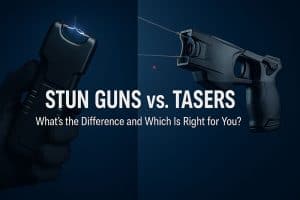
Stun gun flashlights combine a powerful LED flashlight with an integrated stun gun, offering dual-purpose self-defense in one compact device.
These devices typically deliver 10-100 million volts, feature 120-200 lumen tactical flashlights, and cost between $20-$60.
The flashlight serves both as a practical everyday tool and a disorienting tactical element during confrontations.
Key advantages include legal carry in most areas (unlike firearms), rechargeable batteries, and the psychological deterrent of visible electrical arcs.
For best results, choose models with at least 5 million volts, rechargeable lithium-ion batteries, and aluminum construction.
Always verify your local laws before purchasing, as stun gun regulations vary by state and municipality.
Table of Contents
- What Are Stun Gun Flashlights and How Do They Work
- Key Benefits of Combining Flashlight and Stun Gun
- How to Choose the Right Stun Gun Flashlight
- Legal Considerations and Restrictions by State
- How to Properly Use a Stun Gun Flashlight for Self-Defense
- Top Features That Separate Quality from Cheap Models
- Maintenance and Care Tips for Longevity
You’re walking to your car after a late shift. The parking lot is poorly lit, and you fumble for your keys while trying to hold your phone’s flashlight. Suddenly, you wish you had something better—something that could light your path and protect you if needed.
This scenario plays out thousands of times daily across America. Traditional self-defense tools require you to choose between visibility and protection. But stun gun flashlights eliminate that compromise entirely.
In this comprehensive guide, you’ll discover everything you need to know about these dual-purpose devices—from how they work to choosing the right model, understanding legal restrictions, and using them effectively. Whether you’re a security professional, outdoor enthusiast, or simply someone who wants practical personal protection, you’ll find actionable advice to make an informed decision.
New to Stun Guns? Read Our Stun Gun Guide
What Are Stun Gun Flashlights and How Do They Work
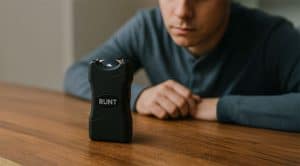
A stun gun flashlight is exactly what it sounds like—a fully functional tactical flashlight with an integrated stun gun built into the same device. These tools typically feature the light at one end and electrical contact points at the opposite end or along the side.
The stun gun component works by delivering a high-voltage, low-amperage electrical shock that disrupts the body’s neuromuscular system. When you press the device against an attacker and activate the shock, it sends electrical pulses that interfere with the communication between the brain and muscles.
Here’s what happens during the electrical discharge:
- Immediate muscle contraction: The electrical current causes involuntary muscle contractions that temporarily disable the attacker
- Disorientation and confusion: The shock disrupts normal neurological function, creating mental confusion for several seconds to minutes
- Loss of balance and coordination: Most targets experience difficulty standing or maintaining motor control
- Temporary incapacitation: Effects typically last 5-15 minutes, giving you time to escape and call for help
The flashlight component usually ranges from 120 to 200 lumens—bright enough for tactical applications. Many models feature multiple light modes including high beam, low beam, and strobe. The strobe function is particularly valuable for self-defense, as the rapid flashing can disorient an attacker before you even need to use the stun feature.
Most stun gun flashlights are powered by rechargeable lithium-ion batteries, eliminating the need for constant battery replacement. You simply plug them into a wall outlet or USB port, and they’re ready to go in a few hours.
Key Benefits of Combining Flashlight and Stun Gun
The genius of stun gun flashlights lies in their multifunctionality. You’re not carrying a weapon that sits unused 99.9% of the time—you’re carrying a practical tool you’ll actually use regularly.
The flashlight serves multiple self-defense purposes beyond simple illumination. When you shine a bright tactical light directly into someone’s eyes, it creates temporary blindness and disorientation. This gives you precious seconds to assess the situation, prepare your defense, or escape. Security professionals call this “light as a weapon,” and it’s taught in many defensive tactics courses.
Practical Everyday Applications
Unlike dedicated stun guns that feel like weapons, these devices blend seamlessly into daily life:
- Walking to your vehicle: Light your path while keeping protection instantly accessible
- Home security checks: Investigate strange noises without fumbling for multiple devices
- Outdoor activities: Perfect for camping, hiking, or late-night dog walks
- Power outages: A practical emergency tool that happens to offer protection
- Vehicle storage: Keep one in your car for roadside emergencies and personal safety
Legal and Social Advantages
Stun gun flashlights often face fewer restrictions than firearms or even standalone stun guns. Many jurisdictions that restrict weapons still allow flashlights without question. The flashlight appearance also reduces social stigma—you can carry it openly without alarming others or drawing unwanted attention.
From a tactical standpoint, the element of surprise is significant. An attacker who sees you holding a flashlight doesn’t realize you’re armed until it’s too late. This psychological advantage can be the difference between successfully defending yourself and facing a prepared adversary.
The rechargeable feature saves money over time compared to disposable battery models. You’ll spend $20-$60 initially but won’t need to budget for ongoing battery costs. Many quality models last 3-5 years with proper care, making them an excellent long-term investment in personal safety.
How to Choose the Right Stun Gun Flashlight
Not all stun gun flashlights are created equal. The market is flooded with cheap imitations that fail when you need them most. Here’s what separates quality devices from overpriced flashlights with useless shock features.
Voltage Requirements
You’ll see voltage ratings from 1 million to 10 million volts advertised. While higher numbers sound impressive, the reality is more nuanced. Any device delivering 3-5 million volts will effectively incapacitate an attacker when applied properly. The key is amperage and contact time, not just voltage alone.
Look for models rated at minimum 5 million volts. This ensures sufficient stopping power even through thick clothing. Anything below 3 million volts is generally too weak for reliable self-defense, though manufacturers still sell them.
Key Specifications Comparison
| Feature | Budget ($20-$30) | Mid-Range ($30-$45) | Premium ($45-$60+) |
|---|---|---|---|
| Voltage | 1-3 million volts | 5-7 million volts | 8-10 million volts |
| Lumens | 80-120 lumens | 150-180 lumens | 200+ lumens |
| Body Material | Hard plastic | Aluminum alloy | Aircraft-grade aluminum |
| Battery Life | 2-3 hours light use | 4-5 hours light use | 6+ hours light use |
| Stun Activations | 20-30 per charge | 50-75 per charge | 100+ per charge |
| Warranty | 30-90 days | 1 year | Lifetime or 2+ years |
| Safety Features | Basic on/off switch | Safety switch + wrist strap | Multiple safeties + disable pin |
Build Quality and Materials
The construction determines whether your device survives real-world use:
- Aluminum body: Aircraft-grade aluminum offers the best durability-to-weight ratio and survives drops better than plastic
- Rubberized grip: Essential for maintaining control during high-stress situations or in wet conditions
- Shock-proof lens: The flashlight lens should withstand impacts without shattering
- Weather resistance: Look for at least IPX4 water resistance rating for outdoor reliability
Weight matters for everyday carry. Models between 8-12 ounces strike the best balance between substantial feel and portability. Anything heavier becomes burdensome; anything lighter often indicates cheap construction.
Battery and Charging System
Rechargeable lithium-ion batteries are standard in quality models. Avoid devices requiring disposable batteries unless you have a specific reason to prefer them. Check the charging method—built-in charging ports are more convenient than removable batteries requiring external chargers.
Battery life varies significantly. Quality models provide 4-6 hours of flashlight use and 50-100 stun activations per charge. Cheaper versions might drain in under 2 hours. Read verified customer reviews specifically mentioning battery performance.
Additional Features Worth Considering
- Safety switch: Prevents accidental discharge in your bag or pocket
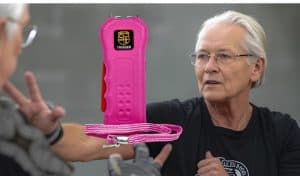
- Wrist strap with disable pin: If an attacker grabs the device, pulling the pin disables it immediately
- Multiple light modes: High, low, and strobe settings increase versatility
- Holster or carrying case: Protects the device and makes carrying more convenient
- Visible arc display: The ability to show the electrical arc without activating full power serves as an excellent deterrent
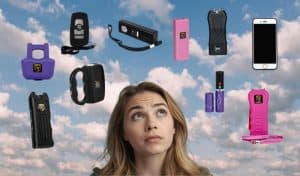
Size matters for your specific needs. Compact 6-7 inch models fit easily in purses or large pockets. Full-size 10-12 inch models offer better reach and intimidation factor but are less convenient for everyday carry. Consider how and where you’ll actually carry the device, not just what looks impressive online.
Legal Considerations and Restrictions by State
Before you purchase any stun gun flashlight, you must understand your local laws. Stun gun regulations vary dramatically across the United States, and ignorance of the law won’t protect you from prosecution.
As of 2025, stun guns are completely illegal for civilian possession in Hawaii and Rhode Island. Several other states impose significant restrictions.
States with Special Requirements
Many states allow stun guns but with conditions:
- Connecticut, Delaware, Illinois, New Mexico, West Virginia, and Wisconsin: Various permit requirements or usage restrictions apply
- Michigan: Must obtain permit to purchase, but no permit required to carry once purchased
- Indiana: Prohibited for individuals with certain criminal convictions
- New York: Recently legalized but with strict regulations on voltage and design
Even in states where stun guns are legal, many cities and counties impose additional restrictions. Chicago, Philadelphia, Baltimore, and other major cities have ordinances that may differ from state law. Always check both state and local regulations before purchasing.
| Legal Status | States | Key Restrictions |
|---|---|---|
| Completely Illegal | Hawaii, Rhode Island | No civilian possession allowed |
| Permit Required | Connecticut, Illinois, Michigan | Must obtain permit or FOID card before purchase |
| Restricted Legal | Delaware, New Mexico, West Virginia, Wisconsin | Age restrictions, concealed carry limits, or voltage caps |
| Felon Prohibited | Indiana, New York | Legal but prohibited for convicted felons |
| Fully Legal | Most other states | No permit needed; check local city/county ordinances |
Age Restrictions and Prohibited Persons
Most states prohibit stun gun possession by minors under 18. Convicted felons face restrictions similar to firearm ownership in many jurisdictions. If you have any criminal history, consult an attorney before purchasing any self-defense device.
Some states prohibit carrying stun guns in specific locations regardless of your legal right to own them. Common prohibited areas include schools, government buildings, airports, and courthouses. These restrictions typically apply even if you have proper permits.
Important Legal Considerations for Use
Owning a stun gun flashlight legally is only half the equation. Using it creates additional legal complexities. Self-defense laws generally require that you face an immediate threat of unlawful force. You cannot legally use a stun gun to protect property alone or in response to verbal threats.
The legal standard in most states is “reasonable fear of imminent bodily harm.” This means a reasonable person in your situation would believe they were about to be harmed. Using excessive force—continuing to shock someone after they’re incapacitated—can result in criminal charges even if the initial use was justified.
Documentation matters if you ever use your device. If you’re forced to defend yourself, immediately call police and report the incident. Wait for their arrival rather than leaving the scene. Consider consulting an attorney before giving detailed statements, as anything you say will be used to evaluate whether your use of force was legally justified.
How to Properly Use a Stun Gun Flashlight for Self-Defense
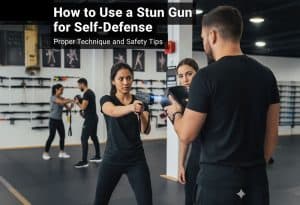
Owning a stun gun flashlight doesn’t automatically make you safer. Effective use requires understanding proper technique, strategy, and limitations. Many people buy these devices and never learn to use them properly, leaving them vulnerable when danger strikes.
Before a Confrontation: Preparation Matters
Your defensive mindset begins long before any confrontation. Carry your device in an immediately accessible location—not buried in your purse or backpack. Many users keep it in their dominant hand when walking through parking lots or other potentially dangerous areas.
Practice retrieving and activating your device regularly. Muscle memory matters during high-stress situations when fine motor skills deteriorate. Spend five minutes weekly practicing your draw, grip, and activation until it becomes automatic.
Maintain situational awareness. The best self-defense is avoiding dangerous situations entirely. Your stun gun flashlight is a last resort, not a license to ignore common-sense safety precautions.
During a Confrontation: Tactical Use
If you face a potential threat, use the flashlight first. Shine it directly into the person’s eyes from a safe distance. This serves multiple purposes—it illuminates the threat, temporarily blinds them, and demonstrates you’re aware and prepared.
The strobe function can be particularly effective:
- Activate strobe mode immediately: The rapid flashing creates disorientation and may deter the threat without physical contact
- Maintain distance: Keep at least arm’s length away while assessing the situation
- Verbal commands: Clearly state “Stay back!” or “Leave me alone!” to establish boundaries
- Create space: Move to a position with escape routes available
If the situation escalates to physical contact, proper stun gun technique is critical. You need direct contact with the attacker’s body for the device to work. Clothing reduces effectiveness, so target areas where the prongs can reach skin or where clothing is thinnest.
Optimal Target Areas
Not all body locations are equally effective:
| Target Area | Effectiveness | Contact Time | Notes |
|---|---|---|---|
| Upper shoulder/neck | Highly effective | 3-5 seconds | Close to nervous system; may be hard to reach |
| Below rib cage | Very effective | 3-5 seconds | Accessible target; usually effective |
| Upper hip/thigh | Effective | 4-6 seconds | Large muscle groups respond well |
| Arms/hands | Less effective | 5+ seconds | Easy to pull away; not recommended |
| Chest (near heart) | Avoid | N/A | Legal liability concerns; target elsewhere |
Hold the device firmly against the target for 3-5 seconds minimum. Many people panic and only apply it for a split second, which rarely stops a determined attacker. The longer the contact, the more effective the incapacitation. However, once the threat is neutralized, continuing to shock can lead to legal problems.
After Using the Device
If you successfully defend yourself, your priority is escape and calling police. Don’t wait at the scene unless the attacker is completely incapacitated and you feel safe. Move to a populated area or locked vehicle, then immediately dial 911.
Be prepared for physical and emotional aftereffects. Your adrenaline will be surging, and you may experience shaking, nausea, or confusion. This is normal. Find a safe location and wait for emergency responders.
Top Features That Separate Quality from Cheap Models
The difference between a reliable stun gun flashlight and a dangerous toy often comes down to specific design features. Here’s what you should look for when comparing models.
Electrical System Quality
Quality devices use advanced circuitry that delivers consistent power across multiple uses. Cheap models often work fine when new but degrade rapidly. The electrical components should include overcurrent protection to prevent damage from repeated use.
The contact points deserve special attention. Look for replaceable or highly durable electrodes. Stainless steel prongs resist corrosion better than cheaper metals. Some premium models feature triple or quad electrode systems that increase the likelihood of maintaining good contact during a struggle.
Flashlight Performance Specifications
Lumen rating tells you brightness, but beam quality matters equally. A focused beam with good throw distance (50-100 meters) is more tactically useful than a wide flood beam. The best models offer adjustable focus, letting you switch between modes as needed.
LED quality varies tremendously. CREE LEDs are industry-leading for durability and light output. Budget models use generic LEDs that fail quickly and provide poor illumination. Check whether replacement bulbs are available—quality manufacturers design for serviceability.
Ergonomics and Control Layout
Your ability to operate the device under stress depends largely on ergonomics:
- Button placement: Controls should be intuitive to find by touch without looking
- Activation method: Separate buttons for flashlight and stun functions prevent accidental shocking
- Grip texture: Aggressive knurling or rubberized coating maintains control in wet or sweaty conditions
- Balance point: Weight should be evenly distributed for comfortable extended holding
Safety Features
Quality manufacturers prioritize user safety alongside effectiveness. Look for devices with multiple safety mechanisms. A physical safety switch prevents accidental activation in storage. Some models include internal safeguards that prevent operation unless properly assembled.
The disable pin system is worth paying extra for. This feature attaches a pin to your wrist with a cord. If someone grabs the device from you, pulling it away yanks the pin out and immediately disables the unit. This prevents your own weapon from being used against you.
Warranty and Customer Support
Reputable manufacturers stand behind their products with warranties of at least one year, often longer. They provide responsive customer service and replacement parts. If a company doesn’t offer a warranty or has consistently poor reviews regarding customer service, that’s a red flag regardless of how good the product specifications look.
Read reviews carefully, but look for patterns rather than individual complaints. Every product has some unhappy customers. What matters is whether the company resolves issues and whether problems are widespread or isolated incidents.
Maintenance and Care Tips for Longevity
A well-maintained stun gun flashlight can last 5-7 years or longer. Neglect will reduce that lifespan to months. These simple maintenance practices ensure your device works when you need it most.
Regular Testing and Charging
Test your device monthly even if you haven’t used it. Activate both the flashlight and stun function briefly to verify operation. This catches problems before they become critical. Many people discover their device doesn’t work only when they need it urgently.
Battery maintenance is crucial for rechargeable models:
| Frequency | Task | Purpose |
|---|---|---|
| Weekly | Visual inspection | Check for damage, cracks, or moisture |
| Monthly | Function test both flashlight and stun | Ensure device operates properly |
| Monthly | Clean electrodes with rubbing alcohol | Remove dirt and oils that reduce conductivity |
| Every 2-3 months | Recharge battery | Prevent deep discharge and battery degradation |
| Every 6 months | Deep clean entire unit | Remove accumulated dirt and check O-rings |
| Annually | Comprehensive inspection | Assess overall condition and consider replacement |
Cleaning and Physical Maintenance
Keep the electrical contact points clean. Dirt, oils, and debris reduce conductivity and effectiveness. Wipe the electrodes monthly with rubbing alcohol on a cotton swab. Ensure they’re completely dry before testing or storing.
The lens requires regular cleaning for maximum light output. Use a microfiber cloth to remove fingerprints and dirt. Avoid household cleaners that can damage coatings. If the lens becomes scratched, replacement is usually possible through the manufacturer.
Inspect the body regularly for cracks or damage. Drops and impacts can compromise waterproofing or create internal damage. Check that all O-rings remain intact if your model is water-resistant. Replace damaged O-rings immediately to maintain protection.
Storage Best Practices
Store your device in a cool, dry location away from direct sunlight. Heat accelerates battery degradation and can damage electronic components. If you keep one in your vehicle, remove it during extreme weather or park in shade when possible.
Keep the device in its holster or case when not in use. This protects it from damage and prevents accidental activation. If your model came with a protective cap over the electrodes, use it—this prevents accidental shocks and keeps the contacts clean.
When to Replace Your Device
Even quality stun gun flashlights don’t last forever. Replace your device if you notice significantly reduced battery life that doesn’t improve after a full charge cycle. If the flashlight dims noticeably or the stun function weakens, internal components may be failing.
Any physical damage that compromises structural integrity requires replacement. Cracked housings can allow moisture inside, leading to electrical failures or dangerous shorts. If the device has been submerged or suffered a severe impact, test it thoroughly or replace it preemptively.
Technology improves constantly. A device from 5-7 years ago likely offers less performance than modern equivalents. Consider upgrading periodically to take advantage of better batteries, brighter LEDs, and more effective electrical systems.
Conclusion
Stun gun flashlights represent one of the most practical self-defense tools available today. By combining everyday utility with effective protection, they solve the common problem of self-defense devices that sit unused until an emergency. The flashlight functionality ensures you’ll carry and maintain the device regularly, unlike dedicated weapons that often languish forgotten in drawers.
Choosing the right model requires balancing voltage, build quality, features, and price. Prioritize devices from reputable manufacturers offering at least 5 million volts, aluminum construction, rechargeable batteries, and comprehensive warranties. Remember that the best self-defense tool is the one you actually carry, so select a size and weight that fits your lifestyle.
Legal compliance isn’t optional. Research your state and local laws thoroughly before purchasing, and understand the legal standards for justified use of force. Owning the device legally is meaningless if you can’t carry it where you need it or use it within legal boundaries when threatened. Finally, practice regularly with your device so you can deploy it confidently if the need arises. Your stun gun flashlight is only as effective as your ability to use it properly under stress.
Shop High-Quality Stun Gun Flashlights for Personal Protection
Disclaimer: This article is for educational and informational purposes only. It does not constitute legal advice. Stun gun laws vary significantly by jurisdiction, and readers are responsible for understanding and complying with all applicable federal, state, and local regulations. The information provided about self-defense techniques does not replace professional training. We assume no liability for injuries, legal consequences, or other issues arising from the purchase or use of stun gun flashlights. Always consult with local law enforcement or a qualified attorney regarding the legality and proper use of self-defense devices in your area.